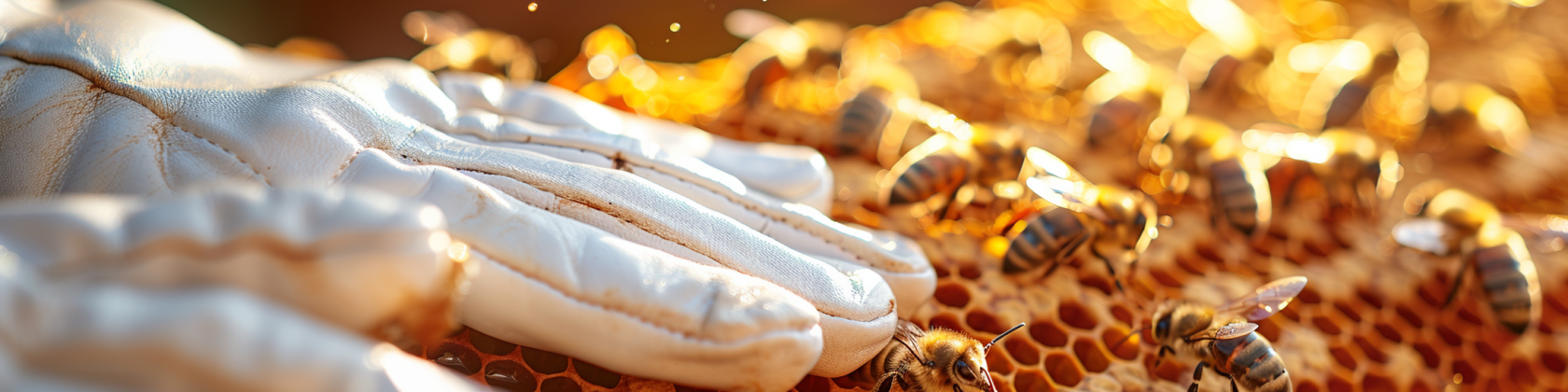
When you’re searching for the best gloves for beekeeping, it’s crucial to think about fit and material. Leather gloves, especially those made from goatskin, offer great protection and allow good movement. Nitrile gloves are also popular because they’re lightweight and easy to clean. It’s vital to choose gloves that fit snugly, so bees can’t sneak inside, and longer cuffs can protect your arms, too. Remember to measure your hands properly before buying. And keep your gloves clean—this helps them last longer! The world of beekeeping gear is quite interesting, so let’s explore more options for you.
How to Choose Your Gloves
When choosing the best beekeeping gloves, it’s vital to evaluate several factors that can impact your comfort and protection while working with bees.
Start by considering the material. Leather gloves, like cow leather, offer great protection but may limit your dexterity. Goat leather is softer, giving you a better feel, so you can work more freely.
If you’re looking for more sensitivity, nitrile gloves allow you to feel the heat from the hive, although they’re often disposable. For those hot summer days, gloves made of mesh materials provide excellent ventilation, keeping you cool while protecting you from stings.
Don’t forget about the design! Look for gloves with long gauntlet sleeves to shield your arms and elastic cuffs that keep them snug. A tailored fit is essential too; you want gloves that won’t slip off your beekeeping suit while you’re busy tending to your bees.
How Should Beekeeping Gloves Fit
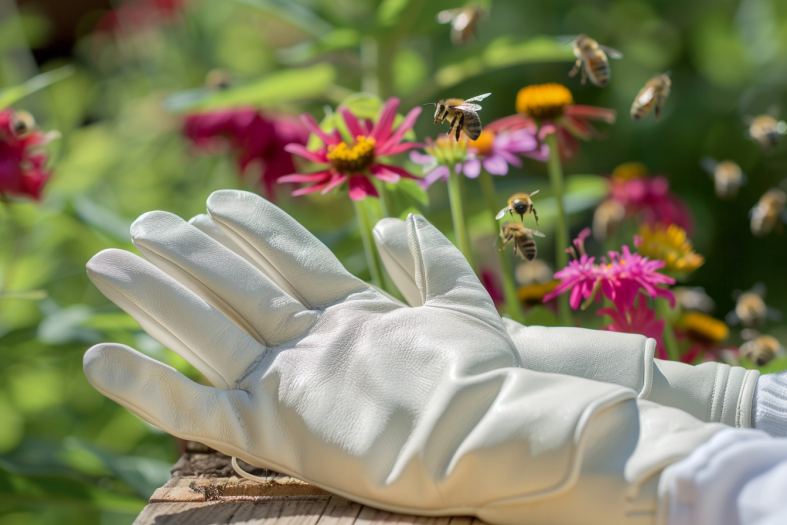
Finding the right fit for your gloves is essential for both comfort and safety. You want gloves that fit snugly but still allow you to move your fingers easily. If your gloves are too loose, it can be hard to handle your tools, and you might accidentally crush a bee or damage your equipment.
Plus, oversized gloves increase the chance of bees crawling inside, which is something you definitely want to avoid!
On the flip side, gloves that are too tight might make it easier for bees to sting through, so finding that sweet spot is key. Look for gloves that provide good protection while still allowing for dexterity, especially around the fingertips.
Materials matter too—some offer more flexibility, while others provide extra protection. Longer cuffs can protect your wrists and forearms, which is always a good idea.
With the right fit, you’ll handle your hive like a pro, enjoying the freedom of beekeeping without worrying about pesky stings!
How to Measure for Beekeeping Gloves
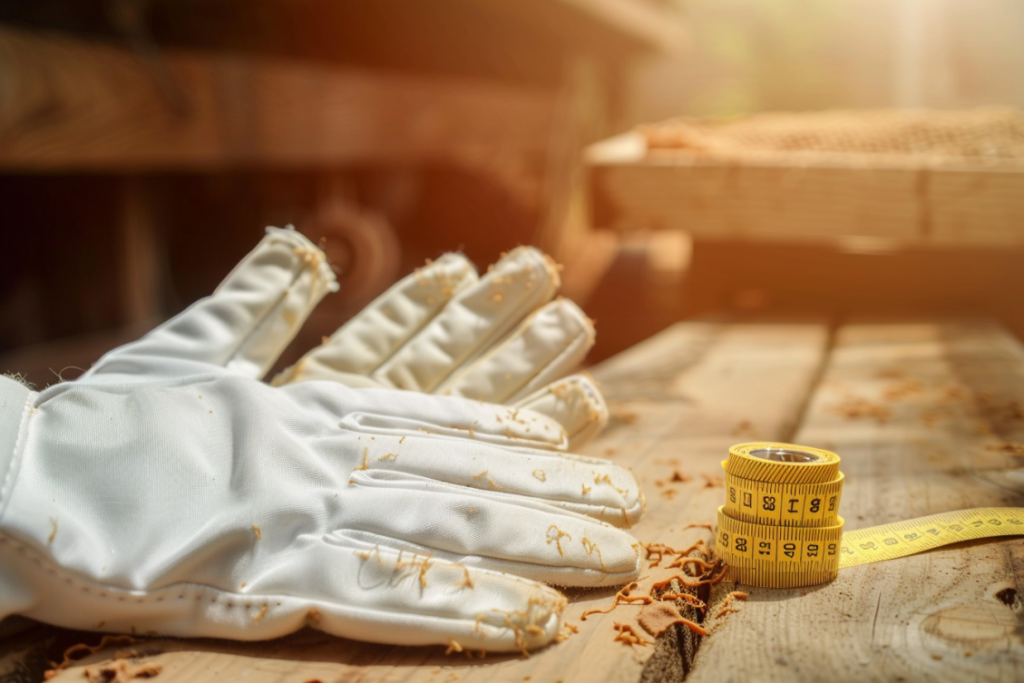
To guarantee you get the right beekeeping gloves, you’ll need to measure your hands accurately. Start by grabbing a tape measure and measuring the circumference of your hand around the knuckles—make certain your fingers are slightly spread apart.
Don’t forget to exclude your thumb during this measurement; it helps ensure a snug fit. Next, measure from your wrist to your middle fingertip to get the length of your hand.
It’s a good idea to take multiple measurements, especially if you’re measuring alone. Once you have your numbers, compare them to the manufacturer’s size chart.
Remember, beekeeping gloves can sometimes run larger than regular gloves, so keep that in mind.
Also, consider the palm width and finger length; you want to avoid too much overhang, which can hinder dexterity. Longer cuffs can be great for extra protection, too.
Choose the Right Material
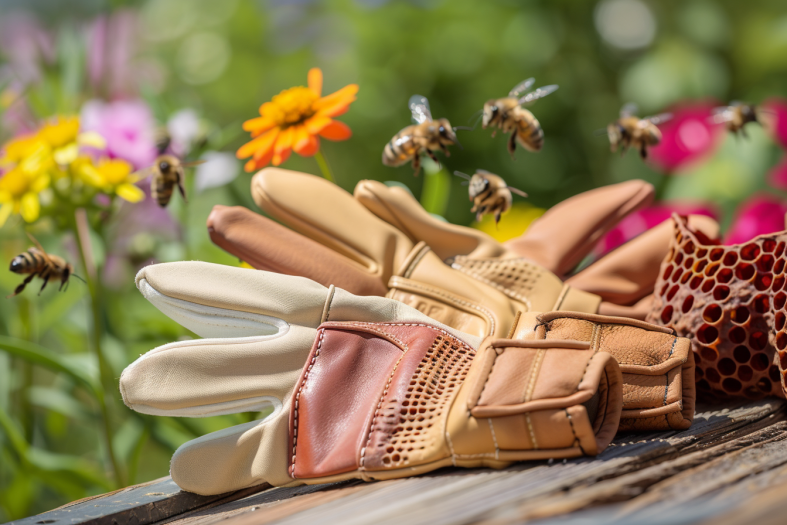
After measuring your hands and determining the right size, the next step is choosing the best material for beekeeping. You’ve got a few options to evaluate, each with its own perks.
Leather gloves, made from cow or goat skin, offer fantastic protection against stings, but they can feel a bit stiff at first. They’re durable and will get more comfortable over time, though they do require special care to keep them in good shape.
On the other hand, nitrile gloves are lightweight and provide great dexterity. They allow you to make precise movements, which is super helpful when working with delicate tasks in the hive. Plus, they’re chemical-resistant and can be disposed of to keep your hives clean.
If you want flexibility, latex gloves are worth a look, but be cautious if you’re allergic to latex.
Choosing the right material is key to enjoying your beekeeping adventures while staying safe!
Goatskin Beekeeping Gloves
When it comes to beekeeping, goatskin gloves stand out as a top choice for both protection and comfort. These gloves are made from premium A-grade goatskin leather, which means they’re not only durable but also super comfy. You’ll appreciate how they fit snugly, allowing you to move your fingers easily for those delicate beekeeping tasks.
One of the best features is their long cotton or canvas sleeves, complete with elastic cuffs. This design keeps those pesky bees out and protects your forearms from stings and other hazards.
Plus, with ventilated designs, your hands stay cool on warm days, reducing sweat and discomfort while you work.
Goatskin gloves aren’t just for beekeeping; they’re versatile enough for camping, mechanic work, or even handling chemicals. Many manufacturers offer satisfaction guarantees, so if you’re not happy, you can return them easily.
Just remember to clean them regularly to keep them in great shape. With all these benefits, it’s clear why goatskin beekeeping gloves are a fantastic choice, keeping you safe while you enjoy the freedom of working with bees.
Protective Gloves for Beekeepers with Vented Sleeves
For beekeepers seeking both protection and comfort, the KINGLAKE Beekeeping Gloves stand out thanks to their premium goatskin leather and vented sleeves.
These gloves offer thick leather for your hands, paired with durable cotton canvas for the long sleeves, giving you complete arm coverage. You’ll appreciate the elastic cuffs, which provide a snug fit while keeping you safe from stings.
Designed to fend off pesky bees, wasps, and hornets, these gloves let you handle your tools and hives with ease. Many users rave about their effectiveness and comfort, with some even using them for other tasks like boat scraping.
While quality is praised, a few have mentioned stitching issues, but overall, they provide great value for your beekeeping adventures!
Best For: Beekeepers who prioritize protection and comfort while performing hive inspections and other related tasks.
Pros:
- Durable construction with thick goatskin leather and sturdy cotton canvas for long-lasting use.
- Vented sleeves provide added comfort and breathability during warmer weather.
- Flexible design allows for easy handling of tools and hives, enhancing overall beekeeping efficiency.
Cons:
- Some users have reported stitching issues that may affect longevity.
- May feel too bulky for those accustomed to thinner gloves or working gloveless.
- Limited feedback on long-term wear performance from users with extensive beekeeping experience.
No products found.
Protective Gloves Long with Vented Sleeves
The KINGLAKE Beekeeping Gloves, crafted from durable goatskin leather and breathable canvas, are perfect for both novice and experienced beekeepers seeking maximum protection and comfort during hive inspections.
With long sleeves and ventilated mesh, these gloves keep you safe while letting your arms breathe, so you can focus on your bees without feeling restricted. Measuring 51 cm in length, they provide excellent coverage, protecting you from unwanted stings from those buzzing critters.
You’ll appreciate the flexibility these gloves offer, allowing you to handle tools and hives with ease.
Plus, they fit both men and women, making them a great choice for everyone in the beekeeping community. Enjoy the freedom of beekeeping without compromising on safety!
Best For: The KINGLAKE Beekeeping Gloves are best for both novice and experienced beekeepers who prioritize protection and comfort during hive inspections.
Pros:
- Durable construction with goatskin leather and canvas for long-lasting use.
- Ventilated mesh sleeves provide breathability, reducing heat and discomfort during warmer days.
- Flexible design allows for easy handling of tools and hives without sacrificing safety.
Cons:
- Sizing may run small for some users, leading to recommendations for ordering a larger size.
- The thicker material may reduce sensitivity compared to thinner gloves for experienced beekeepers.
- Limited colour options, with the primary choice being yellow, which may not appeal to everyone.
No products found.
Moontay Beekeeping Gloves
Moontay Beekeeping Gloves stand out as an excellent choice for both men and women who want reliable protection while working with bees.
These gloves are made from premium goatskin leather, offering fantastic resistance to abrasions and punctures. You’ll appreciate how soft and elastic the material is, allowing for great finger dexterity during delicate tasks.
The ventilated canvas long sleeves keep you cool, and the elasticated cuffs provide a snug fit to help guard against bee stings.
With an ergonomic thumb design that enhances tool handling, these gloves really shine in comfort and functionality.
They’re not just for beekeeping; you can use them for pruning thorny plants, too! Just remember to take into account sizing up if you’re unsure, and you’ll be ready to enjoy your time with the bees!
Best For: Beekeepers seeking a balance of protection and dexterity, suitable for both beginners and experienced users.
Pros:
- High-quality goatskin leather provides excellent abrasion and puncture resistance.
- Ventilated canvas long sleeves promote airflow, keeping users cool during operations.
- Ergonomically designed thumb section enhances tool handling and comfort.
Cons:
- Sizing issues may require users to size up for a proper fit.
- Limited colour options may not appeal to all personal preferences.
- Not ideal for those who prefer working gloveless for increased sensitivity.
No products found.
Cowhide Beekeeping Gloves
Cowhide beekeeping gloves offer a robust alternative to goatskin, combining durability with comfort for ideal bee handling.
These gloves are made from genuine cowhide leather, which means they’re tough and resistant to wear and tear. With an impressive thickness of 8mm, they provide excellent protection against pesky bee stings, letting you work confidently in your hives.
One of the best features is the mesh ventilation cuffs. They keep your hands cool and comfortable, even on hot days. Plus, the wide elastic bands create a secure fit, preventing bees from sneaking in and causing a ruckus.
You’ll also appreciate the professional stitching, especially around the thumbs and fingers, which guarantees flexibility while keeping you safe.
Whether you’re a beginner or a pro, these gloves are versatile enough for any beekeeper. The soft leather and breathable cuffs mean you can wear them all day without discomfort.
And don’t worry about skin sensitivity; this chrome-free leather is allergy-friendly.
With cowhide beekeeping gloves, you get the protection and comfort you need to enjoy your beekeeping adventures. So, gear up and plunge into the world of bees with confidence!
Premium Quality Cowhide Beekeeping Gloves
For professional beekeepers seeking ideal protection and comfort, the SAFTA Premium Quality Cowhide Beekeeping Gloves stand out as an excellent choice. Made from durable cowhide leather, these gloves offer a robust 0.8mm thickness that helps shield you from stings.
The long cotton canvas sleeves not only protect your arms but also feature elastic cuffs, ensuring a snug fit. You’ll appreciate the ventilated mesh at the wrist, keeping your hands cool while you work.
These gloves are designed for dexterity, allowing you to easily handle bees and gardening tools. With reinforced thumbs, they withstand the rigours of beekeeping activities.
While some users have mixed experiences regarding sting protection, many find them comfortable and well-suited for both men and women.
Best For: Professional beekeepers looking for a combination of protection and comfort during hive inspections.
Pros:
- Durable cowhide leather provides excellent sting protection with a thickness of 0.8mm.
- Ventilated cotton canvas sleeves enhance breathability and comfort during extended use.
- Ergonomic design allows for full dexterity, making it easier to handle bees and tools.
Cons:
- Some users report inconsistent sting protection, experiencing stings through the gloves.
- Mixed reviews regarding overall quality, with certain users expressing concerns about durability.
- Fit may vary, leading to potential sizing issues for some individuals.
No products found.
Ventilated Long Sleeves Elastic Cuffs Sting Proof Bee Gloves
The SAFTA Premium Quality Cowhide Beekeeping Gloves are an excellent choice for both beginners and seasoned beekeepers who prioritize comfort and protection.
With ventilated long sleeves and elastic cuffs, they keep you cool while ensuring you’re sting-proof. Imagine working in your garden or hive, feeling confident and free, knowing your arms are shielded by thick cotton jeans sleeves and a double layer of cowhide leather that’s tough against stings.
The snug fit means you won’t squash any bees, reducing the chance of getting stung. Plus, the chrome-free leather helps avoid allergies.
Users rave about their comfort during extended use, making them a fantastic investment for anyone who loves working with bees. You’ll feel secure and ready to tackle any task!
Best For: Beginners and experienced beekeepers looking for a balance of comfort and protection while working with bees.
Pros:
- Durable double-layer cowhide leather provides excellent sting protection.
- Ventilated long sleeves keep you cool during extended use.
- Snug fit design minimizes the risk of squashing bees, enhancing safety.
Cons:
- May feel too thick or restrictive for those preferring more dexterity.
- A higher price point compared to basic gloves may not suit all budgets.
- Not ideal for beekeepers who prefer to work gloveless for sensitivity.
No products found.
Humble Bee 111 Cow Leather Beekeeping Gloves
Designed specifically for beekeepers, the Humble Bee 111 Cow Leather Beekeeping Gloves offer exceptional protection and comfort.
With durable cow leather hands and heavy-duty canvas sleeves, these gloves are made to keep you safe from those pesky stings. The tailored fit features full-length sleeves and elastic cuffs, ensuring they stay snug while you work.
Made from a heavy-weight blend of 60% cotton canvas and 40% cow leather, they’re not just tough; they’re built to last.
Customers rave about their superb quality and comfort, making them perfect for not just beekeeping, but also tasks like pruning hedges.
So, if you’re ready to plunge into the world of bees, these gloves are a smart choice for your adventures!
Best For: Beginners and experienced beekeepers seeking durable gloves that provide excellent protection and comfort during hive inspections.
Pros:
- High-quality materials ensure durability and longevity.
- Tailored fit with elastic cuffs prevents excess material, enhancing dexterity.
- Versatile use beyond beekeeping, suitable for other outdoor tasks like pruning.
Cons:
- Cumbersome feel compared to lighter glove options, which may affect some users’ comfort.
- Higher price point than some alternative gloves, which might not be ideal for budget-conscious buyers.
- Break-in period may be required for optimal comfort and flexibility.
No products found.
Nitrile Beekeeping Gloves
Nitrile beekeeping gloves offer a modern alternative to traditional leather options, combining flexibility and protection for beekeepers. These gloves aren’t only easy to put on, but they also keep your hands clean, which is super important when you’re working with bees. By preventing cross-contamination between hives, they help keep your colonies healthy and thriving.
One of the best features of nitrile gloves is that they provide excellent dexterity. This means you can handle bees and equipment with precision, which is essential when you’re working in close quarters. Plus, they resist chemicals, so you can confidently apply treatments without worrying about your gloves falling apart.
While they aren’t completely sting-proof, they do lessen the chance of a bee’s stinger embedding in your skin.
Cleanup is a breeze since nitrile gloves are disposable, saving you the hassle of getting wax and propolis off your nails. They come in various thicknesses and textures, catering to different beekeeping needs.
Just keep in mind that while they’re convenient, they can trap heat and create sweat inside, so take breaks when needed!
Xtremeauto Nitrile Gloves
For beekeepers seeking reliable hand protection, Xtremeauto Nitrile Gloves offer an exceptional balance of durability and dexterity.
These gloves are made from high-quality nitrile, which means they’re tough and resistant to punctures, so you can focus on your hive without worrying.
With a unique raised diamond texture, they provide a grip that’s perfect, even if things get a bit greasy. Plus, they’re touch-screen friendly, making it easy to check your phone for that perfect bee video!
They’re powder-free and latex-free, reducing the chance of skin irritation.
While some users found them a bit loose in wet conditions, overall, Xtremeauto Nitrile Gloves are a fantastic choice for anyone looking to keep their hands safe while working with bees.
Best For: Beekeepers looking for a reliable combination of protection and dexterity while handling hives.
Pros:
- Durable and puncture-resistant nitrile material offers enhanced protection.
- Excellent grip with raised diamond texture, even in greasy conditions.
- Touch-screen friendly design allows for easy mobile device use while working.
Cons:
- Some users report that gloves can become loose in wet conditions.
- May not provide the same level of protection as thicker leather gloves for beginners.
- Fit may vary depending on hand size and shape, affecting overall comfort.
No products found.
Maintaining Dexterity While Wearing Beekeeping Gloves
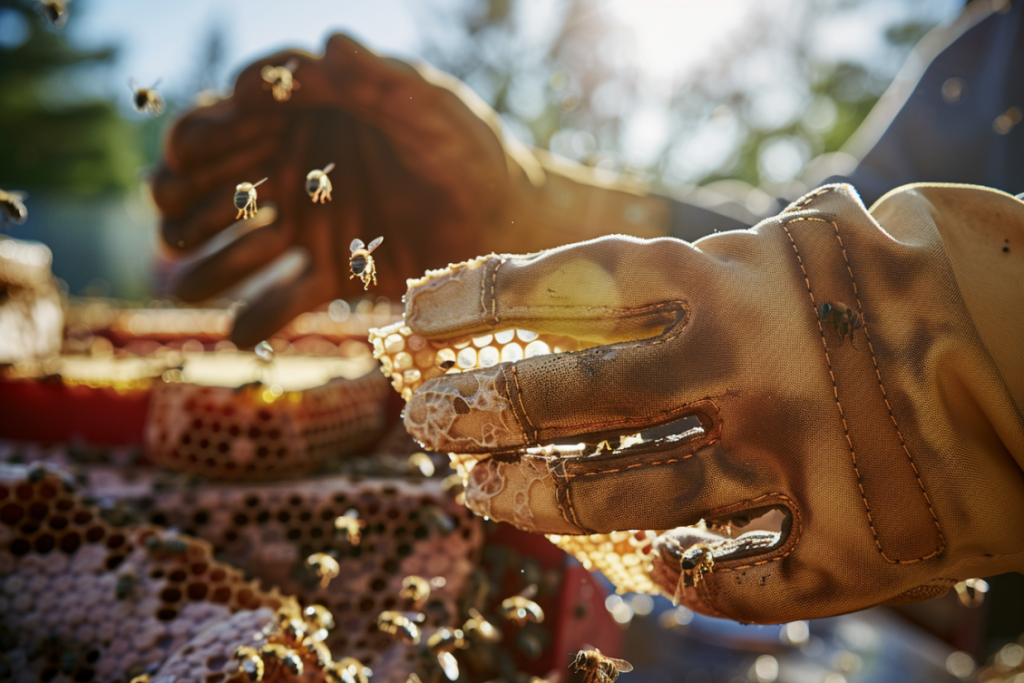
When you’re working with bees, maintaining dexterity while wearing gloves is essential for both your safety and the bees’ well-being. Choosing the right gloves can make a big difference. Nitrile gloves, for example, fit snugly and let you move your fingers freely, which is perfect for delicate tasks like handling live queens or grafting eggs.
Look for gloves that are 4 to 6 mil thick; they strike a great balance between protection and flexibility. Textured fingertips on nitrile gloves provide a solid grip, helping you avoid dropping frames or tools, while ventilated designs keep your hands cool.
By keeping dexterity in mind, you can work more confidently and keep your buzzing buddies happy.
Do Beekeeping Gloves Prevent Stings?
Beekeeping gloves act as a barrier between your hands and the bees, which can greatly reduce the likelihood of stings. When you wear gloves made from high puncture-resistant materials like nitrile or goatskin leather, you’re taking an important step toward protecting yourself. These materials are tough, but they also allow you to feel what you’re doing, so you can handle your bees with care.
However, it’s important to remember that no glove can completely eliminate the risk of stings. If you apply too much pressure while working, even the thickest gloves mightn’t stop a determined bee. That’s why choosing gloves that fit snugly is vital; a good fit prevents bees from crawling inside your gloves, where they can cause trouble.
Also, think about the type of activities you’ll be doing. If you’re just checking on your hives, you might prefer ventilated gloves that are both protective and comfortable.
Why Don’t Some Beekeepers Wear Gloves
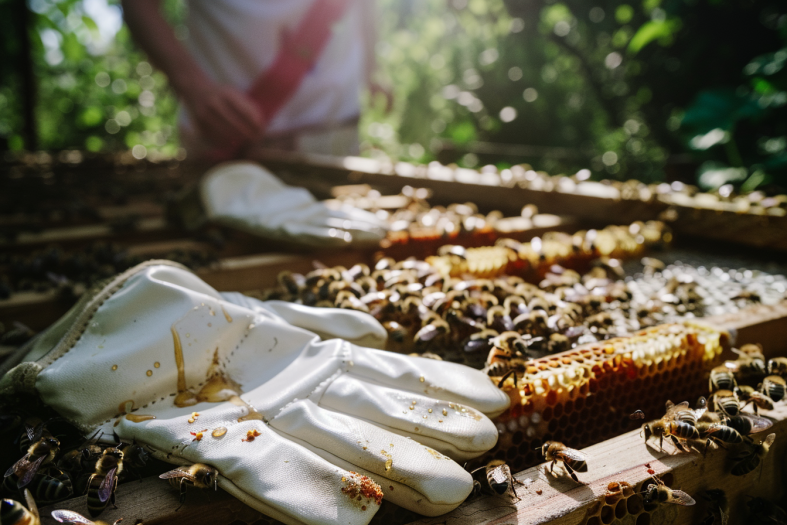
Many beekeepers choose to go gloveless for a variety of reasons that enhance their experience. For one, without gloves, you gain less restriction, allowing you to feel the bees more directly. This increased sensitivity helps you avoid accidentally squashing them while working. You’ll find that handling bees becomes easier and more precise when you can feel their movements through your fingers.
As you gain confidence and experience, you might feel comfortable enough to skip gloves altogether, relying on your skills to navigate their world. Some tasks, like quick inspections, don’t need gloves at all, making things simpler.
Plus, not wearing gloves can improve hygiene, reducing the risk of spreading diseases or pests between hives. You can wash your hands thoroughly afterwards, keeping everything clean.
And let’s face it—gloves can get sweaty and uncomfortable! Many beekeepers embrace this minimalist approach, prioritizing dexterity and personal comfort over extra protection.
Whether you’re just starting or have years of experience, the decision to wear gloves often comes down to your comfort level and the temperament of your bees. So, trust yourself and enjoy the freedom that comes with gloveless beekeeping!
How To Clean Beekeeping Gloves
For those who choose to wear gloves while working with bees, keeping them clean is key to maintaining both their functionality and longevity.
Start by inspecting your gloves for any damage like holes or tears—if they’re worn out, it’s best to replace them. Next, shake off any excess debris, you don’t want to use water just yet.
Gather some mild soap, warm water, and a soft brush. If you have leather gloves, spot-clean them by applying your soapy solution to stains, then gently scrub them with a cloth.
For synthetic gloves, you can fully submerge them in the soapy water and scrub lightly. Rinse thoroughly under running water to remove all soap, as residue can upset bees.
When drying, remember not to twist or wring your gloves. Instead, lay them flat on a towel to air dry, away from direct sunlight.
Finally, store your clean gloves in a cool, dry place to prevent contamination, and regularly clean them to keep odours and sticky residues at bay. Your bees will thank you!
So, when it comes to choosing the best gloves for beekeeping, remember to think about fit, material, and your own comfort. Whether you prefer Nitrile Gloves for flexibility or thicker options for extra protection, it’s all about what works best for you. While gloves can help prevent stings, some beekeepers choose to go barehanded for better dexterity. With the right gloves on your hands, you’ll be ready to plunge into hive inspections and enjoy your time with those buzzing bees! No matter your choice, keeping your gloves clean and well-maintained will help you enjoy your beekeeping adventures safely and happily!
No products found.
 You can unsubscribe at any time.