If you want to support bees during winter, consider planting some bee-friendly plants in your garden. Ivy and hellebores bloom even in cold weather, giving bees essential nectar. Crocuses pop up early, welcoming bees with food when they first emerge, while snowdrops provide crucial nutrition. Mahonias and winter-flowering heather also attract winter-active pollinators with their bright blooms.
By planting these flowers and using smart gardening practices, you’ll keep those buzzing buddies happy till spring returns—stick around to discover even more ways you can help!
Ivy

Ivy is a versatile and hardy plant that can thrive in various conditions, making it a great addition to any garden. With its unique ability to grow by using aerial roots and adhering disks that develop on its stems, you’ll find Ivy climbing walls or covering fences effortlessly. Its simple leaves, often with three to five lobes, create a lush green backdrop in your outdoor space.
In late autumn, Ivy attracts bees and other pollinators, and surprises you with clusters of flowers, filled with nectar, giving them a much-needed food source as the seasons change. These flowers eventually turn into blue-black berries, which birds love during winter, ensuring your garden remains lively even when snow falls.
To keep your ivy thriving, water it weekly during the growing season but cut back in the fall. It prefers dappled sunlight or indirect light to prevent sunburn. Regular pruning helps it grow full and bushy, and if it gets root-bound, don’t hesitate to repot it!
Hellebores

Hellebores are a fantastic choice for winter gardens, blooming between late December and March when many other plants lie dormant. These hardy beauties provide essential food for bees during the chilly months, helping them thrive when other blooms are scarce.
You’ll love how well they adapt to different conditions, flourishing in partial shade with rich, moist, well-draining soil.
When caring for your hellebores, remember to shear back any old or damaged leaves in late winter. A yearly dose of compost or manure can give them a nice growth boost. They appreciate regular watering during their growing seasons in spring and autumn but ease off during the summer dormancy.
Although they’re generally healthy, keep an eye out for pesky aphids. And don’t forget—they’re toxic, so always wear gloves when handling them.
You can even propagate hellebores by seed, creating unique varieties, though results may vary. With their long lifespan and stunning blooms, hellebores can bring a splash of colour to your winter garden, giving you and the bees a reason to celebrate the season!
Willows
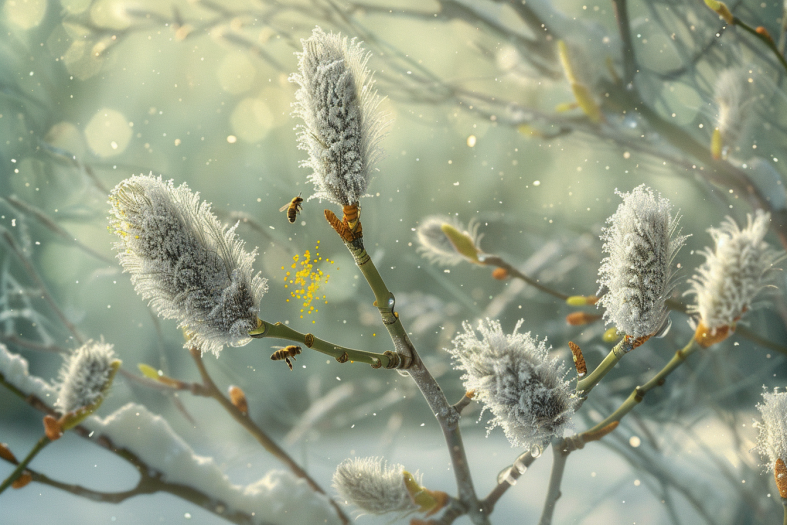
Willows are an excellent addition to any winter garden, offering both beauty and essential support for wildlife. These hardy trees can withstand severe frost, making them perfect for chilly climates. When you plant willows, aim for partial shade to full sun, digging about 15 centimetres deep. For the first few weeks, keep the soil moist, then adjust your watering based on the weather. Don’t forget to mulch around the base to protect those roots!
One of the best things about willows is their adaptability. They thrive in wet soils and come in various types, meaning they can fit in almost any space. Plus, they’re fast growers and often bloom early in spring, providing much-needed nectar and pollen for pollinators like native bees. This is vital since many of them emerge before other flowers do!
To keep your willows healthy, prune any dead branches in winter, and be sure to rake up fallen debris in the fall.
Crocuses
Brightening your winter landscape, crocuses are among the first flowers to bloom, often peeking through the last remnants of snow. These lovely little flowers start to emerge in late winter and can last into early spring, bringing cheerful colours to your garden.
With about 50 different varieties, you can find crocuses in shades of purple, yellow, and white, making it easy to choose your favourites.
What makes crocuses especially important is their role as one of the first pollen sources for bees. When spring rolls around, crocus flowers attract bees with their sweet aroma, helping them regain strength after winter.
Snowdrops

Amidst the lingering chill of winter, snowdrops make their enchanting debut, often pushing through the frost to reveal delicate white blooms. These bulbous perennials stand about 6 to 9 inches tall and spread 4 to 6 inches wide, bringing a touch of beauty to your garden.
But snowdrops aren’t just pretty; they’re also bee-friendly! Blooming from late winter to early spring, they provide crucial nectar and pollen when other flowers are scarce.
Their yellow-orange pollen is a favourite among bees, making snowdrops an essential food source during those chilly months.
Embrace the charm of snowdrops and help nourish our buzzing friends!
Strawberry Tree
You’ll often find the strawberry tree (Arbutus unedo) gracing gardens with its evergreen charm and unique character. This small tree or shrub thrives in full sun, flaunting dark green, leathery leaves that stay vibrant all year long. Native to the Mediterranean Basin and Western Europe, it’s not just a pretty face; it plays a significant role in your garden’s ecosystem.
You’ll love how the strawberry tree attracts bees with its sweet nectar, especially in the winter months when other plants may be sleeping. Plus, its fruits are a tasty treat for birds, making your garden a lively haven.
Winter Aconite
This early-blooming plant is a valuable source of nectar and pollen for bees during late winter and early spring when food sources are scarce. Its bright yellow flowers are particularly attractive to bees, as they offer both an early-season energy boost and are easily accessible.
If you’re looking to support pollinators during the colder months, planting Winter Aconite is a great choice. It’s hardy, low-maintenance, and thrives in well-drained soil with partial to full sun.
Evergreen Clematis
If you’re looking for a climbing plant that can brighten your winter garden while being somewhat beneficial to bees, evergreen clematis is an excellent choice. This fast-growing vine can quickly reach lengths of 20 to 25 feet, making it a fantastic option to cover fences or trellises. With its large, leathery green leaves and clusters of fragrant, star-like white blooms, it adds a cheerful touch during the dreary winter months.
While it doesn’t attract bees in swarms, it can still draw in these little pollinators during its blooming season. Just keep an eye on the species you choose, some can become invasive.
With a little care, your evergreen clematis will thrive and contribute to a bee-friendly garden!
Primrose
Primroses are a delightful addition to any winter garden, offering vibrant colours and early blooms that can brighten even the gloomiest days. With their soft, pale yellow flowers and bright buttercup yellow centres, they’re like little sunshine bursts in your yard. You might also find them in shades of pink, purple, or white, adding even more charm.
Primroses aren’t just pretty, they’re also a favourite for early pollinators like bumblebees! Their unique flowers, known as ‘pin-eyed’ and ‘thrum-eyed’, encourage cross-pollination, which helps produce more seeds.
Mahonias

Mahonias stand out as essential winter plants that not only brighten your garden but also provide significant resources for pollinators. These hardy beauties are a favourite among winter-active pollinators, especially Buff-tailed bumblebees, who rely on them for food during the colder months.
In fact, a lot of winter flower visits by bumblebees are to mahonia flowers! On mild winter days, these plants offer rich nectar and pollen, making them an important source of energy for both bumblebee workers and queens, even in late December.
Mahonias are easy to care for, preferring well-drained soil and tolerating partial to full shade. If you plant them in fall or early spring, you’ll guarantee they thrive.
With varieties like Mahonia aquifolium (Oregon Grape) adding stunning fall colours, mahonias not only support our buzzing friends but also enhance your garden’s beauty, making them a win-win for nature lovers!
Winter-Flowering Heather
Winter-flowering heather (Erica spp.) brings vibrant colour to your garden when most plants lie dormant. These hardy beauties thrive in the winter, withstanding cold temperatures and brisk winds. You can enjoy their stunning blooms in shades of white, pink, and purple from late autumn to early spring. Heather offers a warm welcome to bees looking for food during the chilly months.
With varieties like ‘Whitehall‘ and ‘Myretoun Ruby‘, you’ll add not just beauty but an essential food source for bees, letting your garden buzz with life all winter long.
Winter-Flowering Honeysuckle
Imagine stepping into your garden and being greeted by the sweet, citrus-like scent of winter-flowering honeysuckle (Lonicera fragrantissima). This semi-evergreen shrub, which can grow up to 10 feet tall and wide, blooms from mid-December to March.
Picture it standing proudly, offering its fragrant flowers even when the world outside feels cold and grey.
You’ll find that this lovely plant not only brightens your garden but also attracts bees searching for winter nectar. Plant it near doors or paths so you can breathe in its delightful aroma every time you step outside.
Bee-Ready This Winter

Creating a bee-ready garden in winter not only supports these essential pollinators but also brings life and colour to a typically dormant landscape.
To start, leave your compost heaps untouched. They provide a cosy habitat for insects during the colder months. Avoid digging in your garden until spring, as this can disturb the nests of our buzzing friends.
Diversity is key! Choose a variety of plants that bloom at different times, especially during winter. Hellebores, crocuses, snowdrops, and winter-flowering clematis like ‘Jingle Bells‘ are all fantastic winter options.
These plants aren’t only beautiful, but they also supply the nectar and pollen bees need to thrive.
And remember, steer clear of pesticides—protecting bees means gardening naturally and safely.
Cluster your flowers together instead of planting them alone; this makes it easier for bees to find their favourite spots.
Create Leaf and Twig Piles
A well-constructed leaf and twig pile can transform your garden into a haven for bees and other beneficial insects during winter.
Start by gathering downed branches from your yard or neighbourhood. Use bricks, rocks, or pots to create a base that’s a few inches off the ground. Stack your branches in a crisscross pattern, like a cosy log cabin, allowing air to flow through. This helps the pile stay airy while still being tight enough to provide shelter.
When adding larger pieces of wood, drill holes to create cosy spots for cavity-nesting bees. Don’t forget to add smaller sticks to the sides and on top, which will break down slowly, providing a long-term habitat without attracting pesky critters.
Place your pile in a sunny or part-shade spot, away from buildings, to keep unwanted visitors at bay.
As you maintain your pile, add more material over time, and let it sit undisturbed. This pile won’t only provide a home for insects but also add seasonal interest to your garden.
Plus, it’s a great family project to learn about nature and conservation while making your outdoor space even more vibrant!
Leave Compost Heaps Untouched
Leaving compost heaps untouched can offer significant benefits for your garden’s ecosystem. When you let nature take its course, you reduce labour since you won’t need to turn the compost. Instead, the natural decomposition process unfolds without your intervention. This slower but effective breakdown encourages the growth of beneficial soil fauna and microorganisms, which are essential for a healthy garden.
Plus, by keeping things undisturbed, you maintain a balance in the compost ecosystem.
However, it’s important to keep an eye on moisture levels to avoid anaerobic conditions. Too much moisture can lead to unpleasant odours and even attract pests.
By choosing bee-friendly winter plants like ivy, hellebores, and snowdrops, you can create a cosy haven for our buzzing friends during the chilly months. Remember to leave compost heaps untouched and create those leaf and twig piles, as they provide essential shelter. Even letting some lawn weeds grow can be helpful! With these simple steps, you’re not just gardening, you’re helping bees thrive all year round. So, let’s make our gardens a welcoming place for them.
 You can unsubscribe at any time.