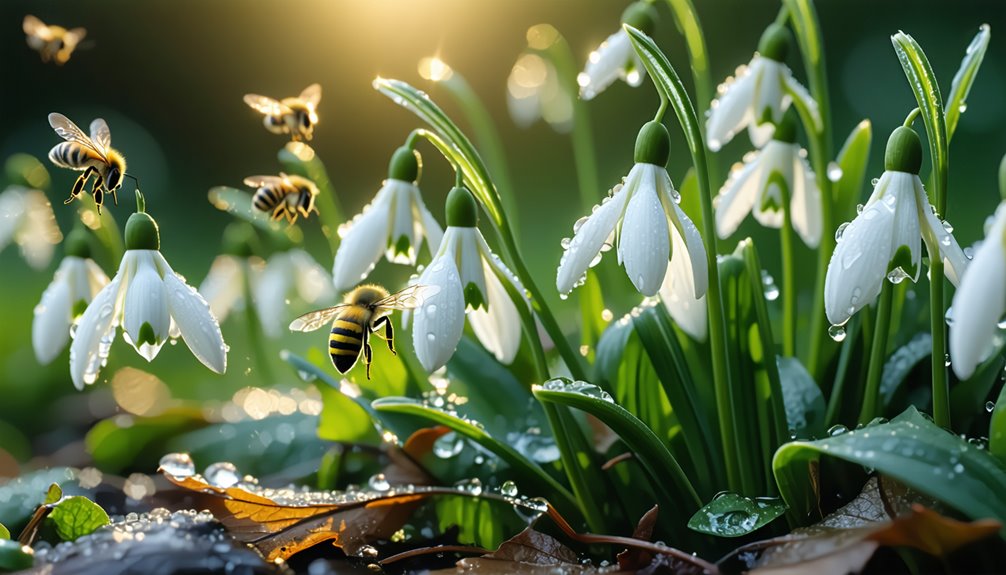
When you think about early spring blooms, snowdrops often come to mind. These delicate flowers not only brighten your garden but also serve an important purpose. You might be surprised to learn just how much bees appreciate them. As one of the first sources of nectar and pollen, snowdrops play a key role in supporting these essential pollinators. But what makes them so appealing to bees, and how can you incorporate them into your garden?
Bees are indeed attracted to snowdrops. These early spring flowers bloom when temperatures are still cool, providing one of the first sources of nectar and pollen for bees emerging from winter dormancy. The flowers’ delicate, nodding shape makes it easier for bees to access the nectar they need to fuel their energy after a long winter. This early forage is critical for bees, particularly for species like honeybees, as it helps sustain their colonies.
In addition to their importance as a food source, snowdrops also play a role in the broader context of biodiversity. By providing early blooms, they can help maintain pollinator populations, which are crucial for the pollination of many other plants. As climate change alters blooming patterns, the timing of snowdrops can offer a vital lifeline for bees that rely on synchrony between their life cycles and the availability of floral resources. Therefore, encouraging the growth of snowdrops and other early spring flowers in gardens and natural spaces can be an effective way to support local bee populations and promote ecological balance.
What Are Snowdrops?
Snowdrops are charming little flowers that herald the arrival of spring, often pushing through the snow to brighten the landscape.
These perennial herbs belong to the amaryllis family and typically grow between 3 to 9 inches tall. With long, slender leaves resembling blades of grass, snowdrops display six white tepals arranged in two circles—three spreading outer tepals and three shorter inner ones.
Native to Europe and the Middle East, snowdrops belong to the genus Galanthus, which includes about 20 species. Their seeds have hook-shaped elaiosomes that attract ants for dispersal, while the foliage emerges from a bulb enclosed in a sheath.
Snowdrops symbolize hope and purity, making them a delightful addition to any garden.
Growing Snowdrops

As you look to cultivate these delightful blooms, understanding how to grow snowdrops is key to enjoying their beauty each spring.
Start by planting dry bulbs in moist, well-drained soil at a depth of 3-4 inches, pointed end up. Autumn is the best time for planting, while late spring works for those ‘in the green.’
Snowdrops thrive in light to moderate shade but can handle full sun. Once established, they require minimal maintenance—just keep the soil moist during the growing season.
Allow the foliage to wither before removal to store energy. They pair beautifully with crocuses and daffodils, creating a stunning early spring display in your garden.
Ideal Planting Conditions for Snowdrops
When you’re ready to plant snowdrops, it’s crucial to choose the right conditions for their success. Snowdrops thrive in full sun or partial shade, but avoid fully shaded areas. You’ll find they flourish under deciduous trees, where they get plenty of light before the leaves fully develop.
For soil, aim for loose, well-drained, and humus-rich types; heavy clay won’t work. Keep the soil moist but well-drained, as soggy conditions can rot the bulbs. Snowdrops do well in various soil pH levels, and adding compost can boost growth.
Finally, remember they prefer cooler climates and need a chilling period to bloom effectively. Select a suitable spot, and you’ll enjoy their early spring beauty!
Optimal Planting Times
To achieve vibrant blooms, knowing the ideal planting times for snowdrops is essential. You can plant snowdrops in autumn, early spring, or late winter.
For autumn planting, place dry bulbs in the ground between August and November, guaranteeing they establish roots before winter sets in.
If you choose early spring, transplant snowdrops ‘in the green’ from February to April for quicker flowering.
Late winter planting is also an option; you can plant container-grown snowdrops while they’re in bloom during January and February.
Just make certain to keep the soil moist and avoid planting dry bulbs late in winter. Timing your planting correctly will guarantee successful establishment and beautiful blooms come springtime.
Soil Requirements and Preparation
Soil quality is essential for the successful growth of snowdrops. You’ll want to start with loose, well-drained loamy soil enriched with organic matter.
Here are three key components to take into account:
- Sharp Sand: Mixing in sharp sand improves drainage and soil structure.
- Compost: Adding compost or leaf mould boosts nutrient content and moisture retention.
- Aeration: Loosen the soil to a depth of 8-10 inches to allow roots to grow freely.
Aim for a neutral to slightly alkaline pH for ideal bulb health.
Make certain your soil drains well to prevent root rot, but retains some moisture, especially during blooming.
Proper preparation sets the stage for a stunning snowdrop display.
Care, Maintenance, and Pest Management
Caring for snowdrops involves keeping their environment balanced and healthy, which is essential for vibrant blooms. Confirm the soil stays moist but well-drained; avoid waterlogging to prevent bulb rot.
In warmer climates, water regularly, while in cooler areas often get enough moisture naturally. Fertilize sparingly, using a potassium-rich option when foliage appears and until it yellows.
Monitor for pests like squirrels and mice, using protective frames to deter them. Discard any plants showing grey mould to curb the spread of disease.
Allow foliage to die back naturally to enrich the soil, and consider deadheading spent blooms to redirect energy.
Finally, divide and replant crowded clumps after flowering in April for continued health.
Recommended Snowdrops Varieties
When it comes to selecting snowdrop varieties for your garden, you’ll find a delightful array of options that cater to different tastes, preferences, and ones that are great for bees. Each variety brings its charm to your landscape!
Galanthus ‘ikariae‘ stands out with its unique green heart-shaped mark. If you prefer larger blooms, try Galanthus elwesii for its impressive white flowers and broad leaves.
The resilient Galanthus nivalis is perfect for naturalising, while Galanthus ‘S. Arnott’ is robust and scented, making it a garden favourite.
Buy From Crocus.co.uk
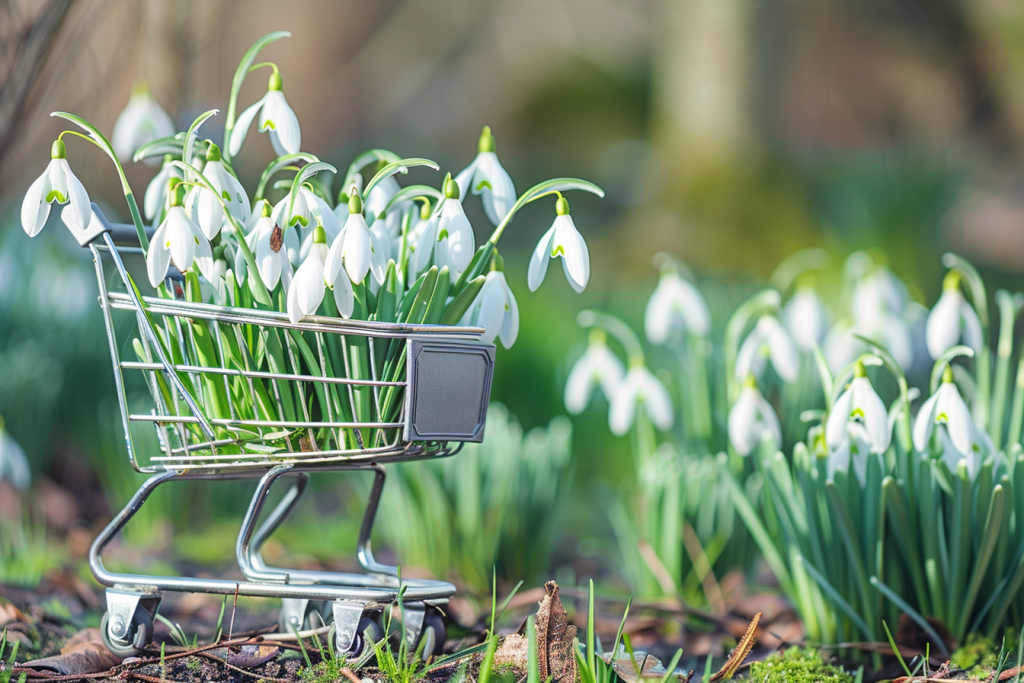
For a stunning selection of snowdrops, search no more than Crocus.co.uk, where you can find bulbs in 9cm pots or convenient packs for preorder.
With a range of award-winning and organic options, you’re sure to discover the perfect bulbs for your garden. Plus, some snowdrops come with discounts, like 20% off selected items.
You can expect fast shipping, with orders arriving within 2-3 working days for in-stock products.
Crocus also offers thorough guides on planting and caring for your snowdrops, making your gardening experience smoother.
Don’t overlook the award-winning Snowdrop collection from Crocus.
Overview of the Snowdrop Bulb Collection
The Snowdrop Bulb Collection offers a stunning selection of award-winning bulbs that herald the arrival of spring.
Available in two options, customers can choose between 35 bulbs or 105 bulbs.
This collection features three distinct species, each bringing its own charm to gardens.
Ideal for naturalistic drifts or mixed borders, these bulbs thrive in various soil types, ensuring a vibrant display that signifies the end of winter and the promise of warmer days.
Explore the Unique Species
How do the unique characteristics of each snowdrop species contribute to their appeal in gardens?
Each snowdrop species offers distinct features that enhance its allure. Galanthus nivalis, with its honey-scented white flowers, grows up to 10cm tall, creating delicate clusters.
Galanthus woronowii stands out with robust, waxy green leaves and reaches 15cm, adding a lush texture.
Meanwhile, Galanthus elwesii, the tallest at 20cm, heralds spring and draws attention with its graceful blooms.
Together, these species provide a captivating display, allowing gardeners to curate diverse landscapes that thrive in early spring, showcasing the beauty and resilience of snowdrops. Visit Crocus.co.uk today and order your award-winning Snowdrop collection.
Companion Plants For Snowdrops
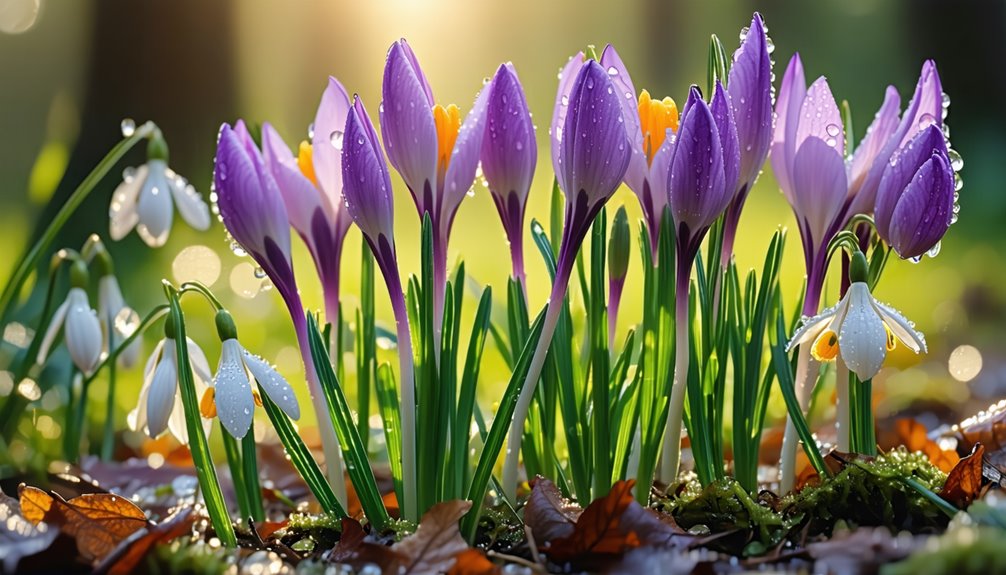
Creating a stunning winter garden is easy when you choose the right companion plants for snowdrops. Consider pairing them with Winter Aconites for a beautiful yellow and white patchwork. Hellebores bloom from January to April, enhancing your display.
In woodland settings, Primroses and Dryopteris ferns work well, giving a lush backdrop. If you want spring colour, Crocuses and Daffodils provide vibrant blooms alongside your snowdrops.
Don’t forget evergreen companions like Ivy, which offers year-round greenery. Specialty combinations, such as Helleborus with Galanthus ‘S. Arnott’, can create a timeless look. Embrace these companions to enrich your garden’s beauty!
To sum up, snowdrops aren’t just beautiful; they’re also a lifeline for bees in early spring. By planting these charming flowers in your garden, you’re not only enhancing its beauty but also providing essential food for pollinators just waking up from winter. Consider adding some recommended varieties to your garden and pairing them with companion plants for a vibrant and bee-friendly environment. So, go ahead and enjoy the sight of buzzing bees visiting your lovely snowdrops!
No products found.
 You can unsubscribe at any time.